Nanny vs House Help Duties in Kenya: A Simple Checklist for Families
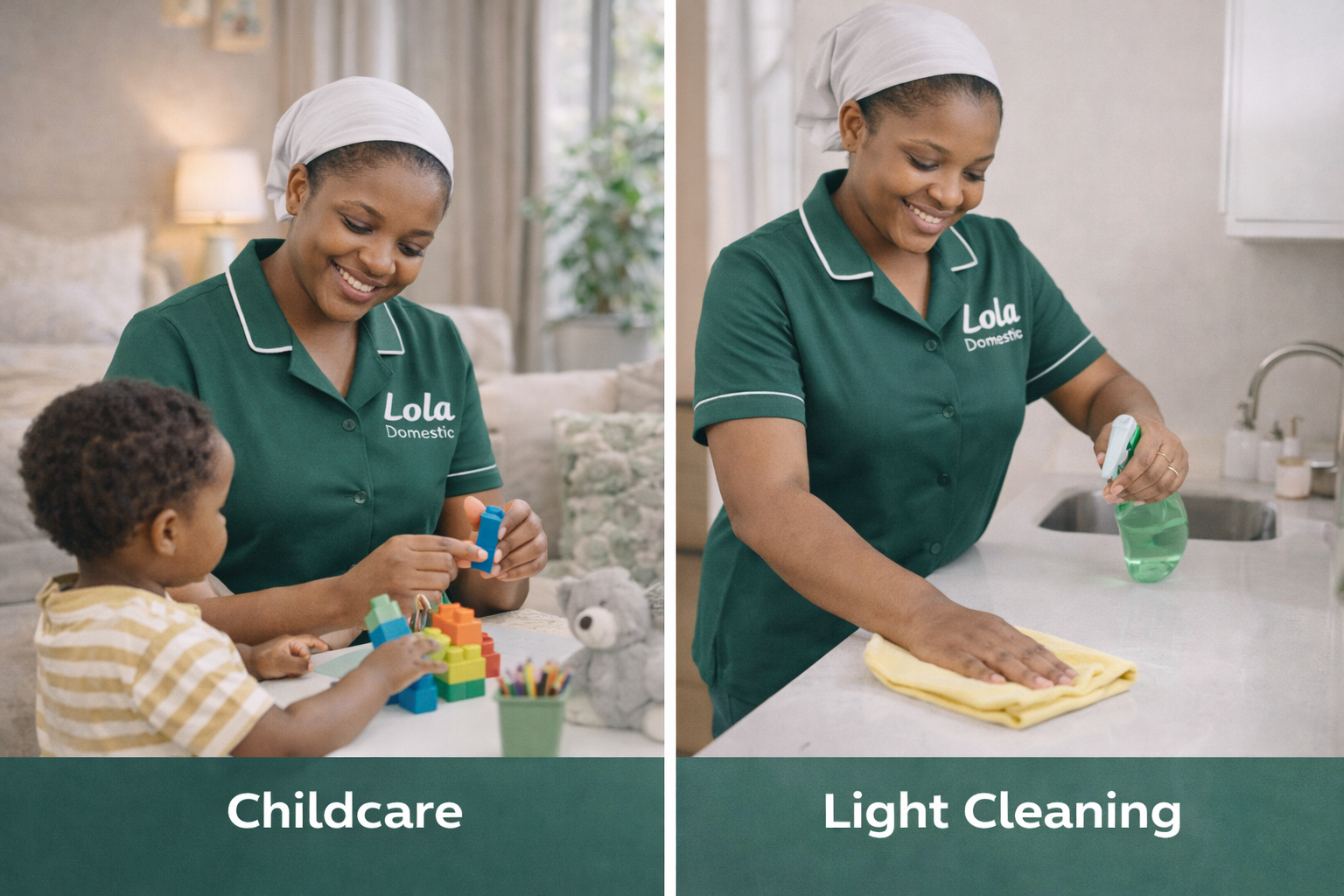
One of the biggest reasons domestic placements fail in Kenya is not “bad people” — it’s unclear duties. A family hires a nanny, then adds full-house cleaning, laundry, cooking, and errands… and the worker feels overloaded. Or a worker expects house help duties, but the family expects full childcare too. Conflict starts like that.
This guide helps you define duties clearly (in a Kenyan, realistic way), so your hire starts smoothly and stays stable. You’ll also get a simple template you can copy into your agreement.
Nanny vs house help: what’s the difference?
Nanny (Childcare-focused)
- Child safety, routines, feeding, play
- School runs (if agreed)
- Baby/toddler care, naps, hygiene
- Kids’ meals (often)
- Light tidying of kids’ areas
House help (Home-focused)
- Cleaning (rooms, kitchen, bathrooms)
- Laundry and ironing
- Cooking (depending on agreement)
- General home organization
- Sometimes errands (if agreed)
Duties checklist (copy & tick)
Use this to define the role clearly before interviews (and before the worker starts):
Childcare duties
- Feeding / bottle prep
- Bathing / hygiene
- Playtime and supervision
- Homework help
- School run / pick-up
- Baby naps & routines
Home duties
- Sweeping / mopping
- Kitchen cleaning
- Bathroom cleaning
- Laundry / ironing
- Cooking (specify meals)
- General tidying
Cooking (be specific)
- Breakfast only
- Kids’ meals only
- Full family meals
- Meal planning / shopping list
- Special diet considerations
Errands (optional)
- Small shopping runs
- Pharmacy runs
- Market trips
- Other: ___________
If you want a combined role (nanny + house help)
Combined roles can work well if expectations are realistic. Define these early:
- Priority: what comes first when both chores and kids need attention?
- Daily schedule: rough routine (morning, afternoon, evening)
- Scope: which rooms are included?
- Cooking plan: daily or a few times a week?
Boundaries that prevent “role creep”
- Write duties down and keep a copy (even WhatsApp is okay).
- Agree on working hours (especially for live-in — live-in ≠ 24/7).
- Agree on pay date and stick to it.
- If duties increase, discuss it and update terms (and pay where fair).
Simple job description template (copy & edit)
JOB DESCRIPTION (NANNY / HOUSE HELP / COMBINED ROLE)


Role type: ________________________________ (Live-in / Live-out)

Location (estate/area): _____________________

Start date: ____ / ____ / _______


Core duties (tick)

[ ] Childcare (age: _______)  [ ] Cleaning  [ ] Laundry  [ ] Cooking  [ ] Ironing  [ ] School runs  [ ] Errands


Working hours

Start time: _______  End time: _______  Rest day: _______


Cooking scope

[ ] Kids only  [ ] Breakfast only  [ ] Full family meals  Notes: ___________________________


Rooms included

[ ] Living room  [ ] Kitchen  [ ] Bathrooms  [ ] Bedrooms (which?) ___________________________


Pay

Monthly salary (KES): __________  Pay date: __________  Allowances: ___________________________


Notes / house rules

____________________________________________________________________________________________
How Lola helps with duty clarity
Lola Domestic helps families define duties before placement. With Lola Managed, we also support agreed terms and help reduce disputes and messy transitions.
Submit an enquiry — we’ll guide you → Are you a worker? Apply to join Lola Domestic →
FAQs
Is cooking always included for a nanny in Kenya?
No. Some nanny roles are childcare-only. If cooking is required, agree on it clearly (and what exactly is expected).
Can one person do everything?
Sometimes, but workload must be realistic. If duties are heavy, consider adjusting hours, pay, or splitting roles.
What’s the easiest way to avoid conflict?
Write duties down, agree on pay date and rest day, and communicate changes early.
Related: More Lola Domestic guides →