What a Fair Domestic Worker Contract Looks Like in Kenya (Simple Template)
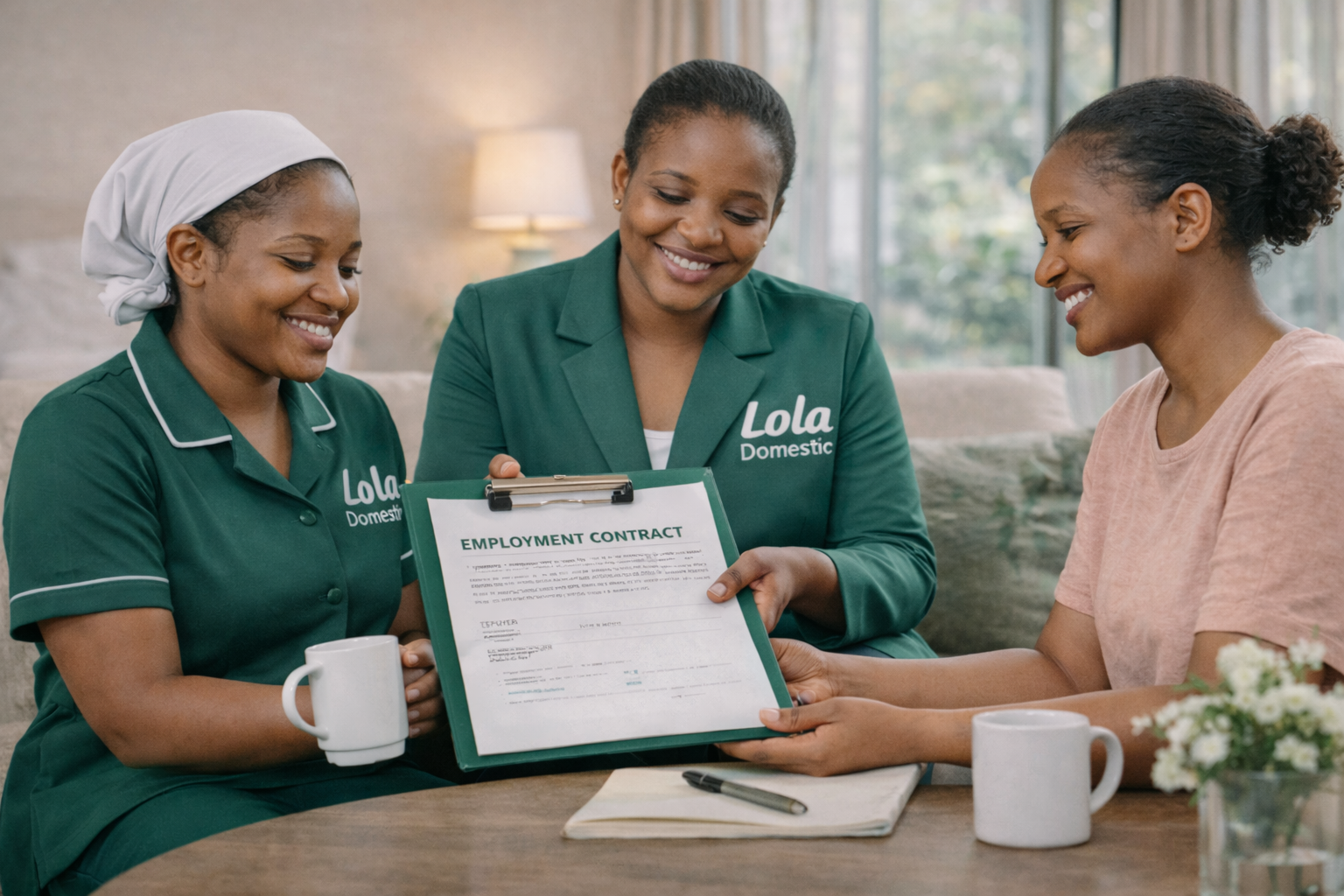
Hiring a domestic worker in Kenya — whether it’s a nanny, house help, caregiver, or a combined role — is a big responsibility. Finding the right person is one part. The other part (that most people skip) is agreeing on clear employment terms.
A fair contract protects both sides: the family knows what to expect, and the worker knows they won’t be “surprised” with new duties, delayed pay, or unclear rest days. And honestly? It reduces drama.
Why written agreements matter in Kenya
In many homes, people start with a “verbal agreement” — then later something changes: duties increase, pay is delayed, rest days become unclear, or someone leaves suddenly. A simple written agreement helps you both stay accountable.
What a fair domestic worker contract should include
These are the basics that prevent misunderstandings:
1) Names, ID, and start date
- Employer full name + ID/phone (or both spouses if relevant)
- Worker full name + ID/phone
- Start date (and if there’s a probation/trial period)
2) Job title and duties (be specific)
Don’t write “general housework” and call it a day. List the core duties so no one is guessing. Example: childcare, cooking, laundry, cleaning, ironing, school runs — whichever applies.
3) Working hours and rest day
- Start and end times (even approximate)
- Weekly rest day (e.g., Sunday off)
- How public holidays are handled
4) Pay, pay date, and any allowances
- Monthly salary (KES)
- Pay date (e.g., 28th / end month)
- Transport allowance (if live-out)
- Any agreed overtime (if needed occasionally)
5) Leave and time off
Agree on annual leave expectations and how emergencies are handled. Even if you keep it simple, write it down.
6) Notice period (very important)
Notice period protects both sides. It gives the family time to adjust, and the worker time to transition. Agree on how much notice is needed (for example, 14 days or 1 month).
Simple domestic worker contract template (copy & edit)
Below is a simple template you can copy into a document. Keep it realistic, not intimidating. The most important thing is that both sides understand it.
DOMESTIC WORKER EMPLOYMENT AGREEMENT (KENYA)


1. Parties

Employer Name: ____________________________  ID/Phone: ____________________________

Worker Name: ______________________________  ID/Phone: ____________________________


2. Start Date

Employment starts on: ____ / ____ / _______  (Trial/Probation if any: _______________________)


3. Job Role

Role title: (Nanny / House Help / Caregiver / Combined) ________________________________


4. Duties (tick/describe)

- Childcare: ________________________________

- Cleaning: _________________________________

- Cooking: _________________________________

- Laundry/Ironing: ___________________________

- School runs/Errands (if any): ________________

Other agreed duties: __________________________


5. Work Schedule

Working days: _______________________________

Daily hours (approx): _________________________

Weekly rest day: _____________________________

Public holidays: ______________________________


6. Salary & Payment

Monthly salary: KES __________________________

Pay date: __________________________ (e.g., 28th/end month)

Allowances (if any): __________________________


7. Leave

Annual leave / time off: _______________________

Emergency time off process: ____________________


8. Notice Period

Either party will give notice of: ________________ (e.g., 14 days / 1 month)


9. Conduct & House Rules

Key rules (privacy, visitors, phone use, security, etc.): _________________________________


10. Agreement

We agree to the above terms and will communicate respectfully if changes are needed.


Employer Signature: ____________________  Date: ____ / ____ / _______

Worker Signature: _____________________  Date: ____ / ____ / _______

Witness (optional): ____________________  Date: ____ / ____ / _______
Extra clauses for live-in placements (don’t skip)
If the worker is live-in, add these to prevent awkwardness later:
- Sleeping arrangements (private space preferred)
- Off-duty hours (so live-in doesn’t become 24/7)
- Meals arrangement (what’s provided)
- Visitors policy (if any)
- Personal time and privacy
How to keep it fair (and avoid disputes)
- Match pay to duties. If the role is combined (childcare + full housework), budget properly.
- No surprise duties. If you add responsibilities, discuss and agree (and adjust pay if needed).
- Be consistent with pay date. Even a few days late, repeatedly, creates tension.
- Communicate early. Small issues are easier to fix in week 1 than month 3.
How Lola Managed supports contracts
With Lola Managed, we don’t just connect you — we help structure the relationship. That includes guiding duty definitions, pay terms, notice expectations, and support during disputes or transitions. It’s designed to protect both sides.
Submit an enquiry — we’ll guide the contract + shortlist options → Are you a worker looking for a respectful home? Apply to join Lola Domestic →
FAQs
Is a written contract required in Kenya?
A clear written agreement is strongly recommended. It helps both sides understand duties, pay, rest days, and notice expectations.
What should I do if duties change?
Discuss it and update the agreement (even if it’s a simple written add-on). Avoid “just start doing it” — that’s where conflict starts.
Can I end a contract immediately?
That depends on what you agreed in your notice terms and the situation. To stay fair, have a notice period and handle exits respectfully.
Related: More Lola Domestic guides →